Sunday, June 11, 2006

Clean Energy News in the AM

Power vets want to start incubator for clean energy
Two power industry veterans, including a co-founder of Sacramento energy software firm Henwood Energy Services Inc., want to launch a local incubator for clean-energy ventures.

Gary Simon and Mark Henwood hope to bring together 15 to 20 companies with new ideas for fuel cells, hydrogen storage systems, solar power and other renewable- energy technologies. The nonprofit incubator would help the companies find funding, develop business plans and research potential markets.

Device could power the future of energy
Dolan has built a machine that creates and stores hydrogen. The device, powered by sunlight, sends electricity through water to separate hydrogen from oxygen and then pumps the hydrogen as a gas into a container, where it is stored as a renewable energy source.

"Once you have this stored hydrogen, you can take it out of here and run it into any device that uses fossil fuels," said http://www.blogger.com/post-create.g?blogID=23739009Dolan, a 46-year-old Trumbull resident. "The only thing hydrogen won't do is it won't make plastics. That's what we need fossil fuels for."
...
But a problem with Dolan's prototype, from a practical standpoint, is the space needed to store hydrogen.

A pound of hydrogen may have three times the energy content of fossil fuels, but it takes 400 cubic feet to store the hydrogen equivalent of a gallon of gasoline, Dolan said.

But Dolan said his machine's storage container, 4 feet by 8 feet and capable of storing 1,000 cubic feet of hydrogen, could be larger.

Martin Ferguson and the nuclear debate
Ferguson claims that the existing policy discriminates in favour of existing uranium mining companies and against other potential uranium miners. He ignores the option of levelling the playing field by putting an end to uranium mining altogether.

In a March 20 briefing paper, which Ferguson is circulating within the ALP and to trade unions, he states: “State and Territory Labor governments which have knowingly allowed uranium exploration, will come under pressure to allow the development of discoveries within the next few years: if they reject mining applications, it will raise questions about sovereign risk for mining investors in Australia.”

But uranium exploration companies are well aware of Labor’s policy of opposition to new uranium mines. Labor state governments or a future Labor federal government face no legal risk. Further, state Labor governments could put an end to the current situation whereby they allow, and sometimes subsidise, uranium exploration.

UK and France to work more closely on N-power
France and Britain announced yesterday that they will work more closely in the civil nuclear field at a time when London is widely expected to restart the country's atomic energy programme.
"We have agreed to explore in the short term and further develop the opportunities of working together in the civil nuclear field," the two countries said in a joint statement after a summit in Paris.
"To that end we have agreed to establish a regular Franco-British Nuclear Forum, involving representatives from government, industry and technical experts."


The big question that I still ask is will this push for clean energy keep going after the price on oil crashes? Yes, I am now saying crash since the futures market has refused the let the prices come down gradually. I am not the only one thinking that although I do think it will take a bit before it happens.

BP's CEO, Lord Browne, disagrees with me though. He is saying that the price for oil will crash to $40 in the very near future.

BP CEO Lord Browne says oil price will fall to 40 usd per barrel mid-term
BP PLC chief executive Lord Browne told Der Spiegel he expects world oil prices will fall to 40 usd per barrel in the mid-term and that in the long term they could drop to 25-30 usd per barrel.


technorati tags: , , , , , ,

Friday, June 09, 2006

Energy Impact of the World Cup

England expects one heck of a power spike come tomorrow when England faces off against Paraguay. This article states that the spike could be as high as 1,500 megawatts. Apparently it has something to do with that country's fascination with drinking tea.


technorati tags: , , , , ,

Thursday, June 08, 2006

Quick Solar Power Trivia

The World Cup Soccer (Football to the rest of the world) games start soon and Germany is doing what they can to keep it green such as offering free mass transit trips and using rain water recovery systems for use with the sanitation systems.

Plus, 2,500 kilowatts will be generated by solar power during peak hours.

Articles:
Green Goals for World Cup Nets
World Cup city sets green goals
Germany's 'green swathe' cup goal


technorati tags: , , ,, , ,

Wednesday, June 07, 2006

Quick Solar Power Trivia

The World Cup Soccer (Football to the rest of the world) games start soon and Germany is doing what they can to keep it green such as offering free mass transit trips and using rain water recovery systems for use with the sanitation systems.

Plus, 2,500 kilowatts will be generated by solar power during peak hours.

Articles:
Green Goals for World Cup Nets
World Cup city sets green goals
Germany's 'green swathe' cup goal


technorati tags: , , ,, , ,

Biofuels Branch Out: News

A bunch of news postings to keep everyone up to date on what is happening around the world at the moment. Of course I cannot place everything here but here is a good grouping.


Fight over ethanol bill centers on Governor
"I certainly hope it does not increase the cost of gasoline as some have claimed," Blanco said, adding she wanted to support Louisiana's development of the alternative fuel industry. She has asked for further details on pricing of ethanol and biodiesel around the country.

Under the bill, the sale of the plant-based fuels would be required once production of the products in Louisiana meets certain benchmarks, and then a percentage of the gasoline sold would have to include the biodiesel or ethanol. The Legislature gave final approval to the measure last week, though the margin of victory was narrow in the House.

Green light for biofuel car
Two Norfolk companies are helping the environment with cars that run on biofuels.

Norwich Union, the city's biggest employer, hopes to bring green cars into its company fleet, while the chief executive of the company's insurance arm is testing out a biofuel model himself.

The company is working with carbon reduction campaigners at CRed, based at the University of East Anglia.

Meanwhile, Renewables East, the Norwich-based green energy agency for the East of England, has bought a Ford Focus that can run on either biofuel or conventional petrol.

Ethanol plants to open new market to growers
In-state facilities, like one recently announced here in far western New York, represent “another significant step in our goal of developing a strong biofuel industry in the state,” said Gov. George Pataki, “which will not only provide an economic boost to our farming community, but keep our energy dollars here in New York.”

Pataki, the first Northeast governor to join the Governors' Ethanol Coalition, promised $6 million and other incentives for the $87 million Shelby facility to be built on an old cabbage farm. It may be the first plant to get up and running, with groundbreaking expected in June and production in January 2008.

For local farmers, having a new market in their own backyard promises to pay off.

Government looks to biofuel to stave of oil crisis
Under the target the government has set for itself, it is planned that Indonesia will cut the contribution of oil to total energy consumption from the current 55 percent to only 15 percent in 2025 by developing other energy sources, such as hydropower, coal, gas and biofuels.

Will the country succeed in achieving the target? Many are optimistic that it can.

Such optimism is reflected by ministers and government officials across the archipelago.

Biofuel developed in Cuba
Rocketing oil prices have made Cuba search for less polluting energy sources as biofuels.

It has become ever more urgent the need to stop irrational hydrocarbon consumption, led by the United States, the greatest polluter worldwide. This situation and the diminishing oil reserves, will have a negative impact in national economies, above all in developing countries.

Angara bats for energy independence through utilization of biodiesel, ethanol
He noted that the Philippines imports 94 percent of its annual oil requirements, making the country vulnerable to constant world price increases.

He said that an increase of $1 in world oil prices translates into about $1.26 million in added foreign exchange requirements for the Philippines.

Bio-fuels are crop based transport fuels such as biodiesel and ethanol, Angara said, and in the Philippines, the same can be produced from coconuts and Jatropha while ethanol, from sugarcane, corn and cassava.

He pointed out that unlike petroleum-based fuels, ethanol is cleaner and emits less carbon dioxide.

Pischetsrieder's VW To Produce Flex-Fuel Models In Brazil
Now the Brazilian unit of Bernd Pischetsrieder's Volkswagen has said it will only produce vehicles that run on a mixture of traditional fuels and ethanol from this month, ending production of gasoline-only models. Other car makers also produce a large proportion of flex-fuel vehicles--that can run on ethanol, gasoline, or a blend of the two--in Brazil but none so far has switched entirely to this technology, reports AFX News.

Branching out for fuel
Kenneth Stewart, director of the Georgia Forestry Commission, says 30 companies have expressed an interest in opening biofuel plants in Georgia that use pine wood to make biofuel, a cleaner-burning fuel made from plant matter or animal fat, such as ethanol.

Ethanol is a type of alcohol, made from converting plant crops into sugars, that can be refined into fuel that burns cleaner than gasoline.

Middle and south Georgia are likely to see the benefits of such refineries, because transportation costs for logs are too high for the plants to be located far from timber supplies.


technorati tags: , , ,, ,

Tuesday, June 06, 2006

Links of the Moment: National Energy Policy

U.S. National Energy Policy


Canada's Energy Policy

Mexico's Secretariat of Energy

Smart Cars Headed to the US?


I have my doubts, to be completely honest. Sure, it is a solid vehicle that will get people around and save you a ton of money on gas. However, they will need a very low price point to get them on the road. This is going to be a second or third car for families and a possible first car or trade up for city singles. With the price of oil and gas driving everything up in price, savings on the initial purchase and promises of savings in the future will be needed to drive the initial sales.

Another doubt is because back in 2003 it was announced that the Smart Cars would be here in 06. Now they are saying they will decide later this month whether to bring them over for next year. It is a shame they did not roll them out for this year because next year they will probably have some serious competition. Toyota's new Yaris, Honda's Fit, and a possible two door Aveo boasting or impressive mileage. Not to mention over a million hybrid vehicles.

Then again I was actually behind a Smart Car two weeks ago in Raleigh. So yes, they can be imported, if you want to spend over $30K.

Now to combine the latest hybrid tech with a Smart Car. Just throw a 6 gallon gas tank on it and travel up and down the coast on one tank of fuel.

Articles:
Will the US get Smart? --anyone else humming the theme song to `Get Smart' right now or is it just me?

Smart Gains Ground in Canada, Loses Everywhere Else

DaimlerChrysler's Zetsche Upbeat On Smart Car For U.S.

Link:
Smart Car Website - Note that the US specific has no information on it


technorati tags: , , ,, ,

Monday, June 05, 2006

Why Are We Still Playing At This?

OK, one of Iran's head idiots in charge just announced they will mess with the oil flow should everyone not bow down to them and their un-needed nuclear program. The same oil that finances just about everything they do. Their own life supply. I know kind of whacky but that area of the world really enjoys their homicide bombers.

News source:
Oil surges on Iranian threats to disrupt global supplies
Yesterday, Ayatollah Ali Khamenei warned the US that any 'mistake' in its dealings with the Islamic Republic would lead to consequences for global energy supplies.

Iran exports around 2.6 mln bpd of crude but has the potential to disrupt some 17 mln bpd through through the Straits of Hormuz. As global spare capacity currently stands at 1.5 mln bpd, such a move would be send prices spiralling.

Note that their plan may include disrupting other countries supplies. Foolish. My father always told me that you never mess around with another man's wallet.

Right now we cannot really do a whole lot about our demand for oil and the amount that we have to import. Whatever we build or explore today will take years before it is contributing substantially to our own energy independence. However, we can make moves today to try and stop this from happening again in another ten years.

I noticed yesterday that a tonne of neighbors were out mowing their grass. So was I and let me tell you, my mower guzzles the gasoline. Add to that the fact that I have a good deal of land and it can be rather expensive to maintain the lawn. Not to mention the emissions. How about the government mandates non-commercial lawn mowers should be hybrids? We are already heavily subsidizing the hybrid vehicles so why not the lawn mowers? The lawn mower subsidy can end three years after the vehicle subsidy. Current gas mowers to be turned in at recycling centers so that the oil can be reclaimed, gasoline deposits properly taken care of, and anything that can be melted down and used can have that done as well. My point is that we can start small and build up to the larger things in life.

Any replacement water heater will need to be a solar hot water heater. Mandatory for all new homes built from 2009 and on. Offer incentives on installation and purchase for current owners.

Incentives for gas station owners to add an E-85 pump and dish out E-10 on at least one Unleaded Regular pump. Also provide some form of incentive for anyone who owns and runs their vehicle on flex fuels (would be tough on this one, perhaps saved receipts to be included with tax returns?). Incentives to the distributors to expand flex fuels and bio-fuels.

Continue to improve technology for small footprint oil extraction, processing, and distribution.

All hybrids built after 2007 must be flex fuel-clean energy hybrids.

Education campaign, including mandatory classroom time for those in drivers ed, on the importance of maintaining one's vehicle and how it impacts fuel consumption.

Continue the incentives for those who add alternative energy to their homes such as a solar panel setup. Have all new homes built meet higher insulation standards.


technorati tags: , , ,, ,

Thursday, June 01, 2006

The Ethanol Process

Please remember to follow the rules and regulations in your area of residence. U.S. citizens be aware that making ethanol may require permits and will require that you pay a fuel tax to the feds. No surprise there since they tax everything but our ability to breathe but I have heard they are working on that too. Alcohol permit link.

I have mentioned ethanol a lot on this blog. It is a fuel source that was once very plentiful here but cheap oil prices drove it out. Now, with high oil prices, it is making a comeback and even the feds have mandated that it will replace MTBE (also was mandated and later found to cause cancer).

Basically you are making moonshine. 180 proof alcohol that your car may or may not love you for and the same goes for your wallet. Although large scale farming operations and processing may produce positive energy gains, it may not be so for a homegrown installation.


Resource Link: Mother Earth Alcohol Fuel: Chapter 3 (Alcohol Yield)


First you have to choose what you are going to distill. Check out the link above to get an idea of what may work for you.

Grind down product to expose the starches.

Add a bit of water and some enzymes to convert those starches to sugar.

Add yeast (sounds just like making your own beer ) to get those sugars to covert into ethanol.

The ethanol is then distilled so that it can be seperated out.

The resulting ethanol is then put through dehydration to remove any extra water.

Sealed up tight ethanol can last a long time, opened canisters will eventually dilute over a period of time.


Did you know?
That ethanol was almost driven out of existence in the U.S. because it was taxed to help fund the Civil War. The tax lasted until 1906.

That ethanol was banned during Prohibition because it was considered alcohol.


Basically you need to build a still and a good one. Plans will run from $20 on up and the actual costs of the materials can run hundreds of dollars. Plus this is not something you really want to do in your house and possibly not even the garage.


technorati tags: , , , ,, ,

Wednesday, May 31, 2006

Consumers pushing for some alternative energy choices

The first article focuses on a couple who went from oil heating to a geothermal solution. I looked into this when I first had my house built but the price to install a geothermal heat pump was very, very expensive. I think a radiant heat solution probably would have been a touch cheaper back then. Of course I asked about a solar hot water heater and got blank stares.

Alternative energy: Westonites find relief from rising heating oil costs
With fuel prices going through the roof, some enterprising Weston families and one local builder are using an alternative energy source called geothermal heating — also known as geoexchange — to beat the price of oil heat.

At today’s rate of about $2.50 for a gallon of heating oil, a 6,000-square foot home costs roughly $7,500 a year to heat. A geothermal home costs significantly less.

Rone and Carol Baldwin of Fanton Hill Road are dumping their old oil burner and installing new geothermal heating throughout their antique colonial home. “Our oil bill this year was astronomical, but we won’t have to use oil at all anymore,” Mr. Baldwin said.

Builder Robert Gary is outfitting a new home on Valley Forge Road with a geothermal heating system rather than a conventional oil heating system. He is also converting his own home in Redding from oil to geothermal because he believes it is better for the environment.

Quest for energy alternatives steps up
"It's just been totally crazy," Seth Snyder, section leader for chemical and biological technology, said of the stepped-up demand for workshops and research information. "Everybody's interested now. ... We've been saying all along we can make a big impact, and suddenly people are saying 'Maybe these people are right.'"

Of course in everything there is the red-headed stepchild. In the U.S. it is nuclear power. This is mostly due to misconceptions and thinking that the China Syndrome movie was fact driven all of the way through.

Survey: Americans Not Warming Up to Nuclear Power as Solution to Energy Crisis and Climate Change
Despite a major sales push by the
Bush Administration and the electrical utility industry, nuclear power is
viewed in a deeply skeptical way by a "strong and strikingly bipartisan
majority" of Americans, according to a major new Opinion Research
Corporation (ORC) survey released today by the Civil Society Institute, a
nonpartisan and nonprofit think tank that has conducted extensive public
opinion research into the attitude of Americans about energy-related
issues. According to the survey, Americans favor developing clean renewable
energy alternatives and strategies -- including increased conservation,
solar energy and wind power -- that can be delivered more rapidly than
nuclear power.


technorati tags: , , , ,, , ,

Fuel Cell News

Fuel Cell Plant Planned

The plant would consist of five 2-megawatt fuel cells that together would generate 10-megawatts of power, enough energy for nearly 10,000 homes.
((snip))
James Murkett, principal at Farmington-based PurePower LLC, the project developer, said the fuel cell project hopes to participate in a state program aimed at developing 100 megawatts of power from clean energy sources in Connecticut by 2008.

Get Your Driver's License in a Fuel Cell-Powered Car

AUBURN HILLS, Mich., May 31 -- Over the last year some lucky individuals have had the opportunity to drive a zero-emissions Mercedes-Benz fuel cell-powered passenger car to the Department of Motor Vehicles (DMV) in California to complete their driver's test.
((snip))
DaimlerChrysler has spent more than $1 billion in fuel cell vehicle research and development. No other manufacturer has accumulated more data or driven more zero-emissions miles -- almost two million.

Nissan Offers Fuel Cell Vehicle Test Drives

As part of its efforts to further the practical use of fuel cell vehicles, Nissan is offering consumers the chance to test drive its X-TRAIL fuel cell vehicle.

The test drive will be offered for up to a year from Nissan's headquarters in Tokyo. In June, the high-pressure, hydrogen-powered model will be available for test driving every weekend. The schedule for the rest of the year will be announced at a later date.

Nissan will use the feedback generated from customer test drives, as well as data acquired through public-road testing in Japan and overseas, for its ongoing FCV development.

The X-TRAIL FCV is equipped with a Nissan-developed fuel cell stack that has a power generation capacity of 90kW giving the model a top speed of 150 km/h. The model also features a compact, 35MPa high-pressure hydrogen storage cylinder resulting in a cruising range of more than 370 km. The model was approved for public road testing by Japan's Ministry of Land, Infrastructure and Transport in December 2005.

Vehicle research looks beyond oil

Hillebrand says he's confident the nation can move away from its dependence on foreign oil, but he believes the solution lies in a combination of new options, not one single answer.

"We are the Saudi Arabia of coal, because we've got all the coal we want. We're the Saudi Arabia of shale oil, tar sands, biofuels. ... Solar, wind," Hillebrand says. "The U.S. has got substantial carriers of fuel and energy supplies. The problem the U.S. has is they're not oil; they're in different forms.

"So what our research is really focusing on is giving the U.S. alternatives to just using oil, and there are a lot of alternatives."

Of course driving these types of cars should have other perks. Perks like really neato new fabric.

Honda Develops Bio-Fabric for Use in Fuel Cell Automobile Interiors

Tokyo, Japan, May 25, 2006 (JCN Newswire via COMTEX) -- Honda Motor Co., Ltd., (TSE:7267) today announced it has succeeded in developing bio-fabric, a plant-based fabric with excellent durability and resistance to sunlight, for use as a surface material in automobile interiors. Bio-fabric offers the benefit of offsetting CO2 emissions produced during incineration in the disposal stage with CO2 absorption that occurs during the growth stage of the plants that are used as raw materials. Despite this benefit, plant-based fabric has not been used commercially for automobile interiors due to concerns about limited durability and aesthetic issues.

The new bio-fabric developed by Honda overcame such issues, and achieved a soft and smooth material appropriate for the surface of automobile interiors, with high durability and excellent resistance to sunlight to prevent color fading after prolonged use. In addition to seat surfaces, this bio-fabric can be used for the interior surface of the doors and roof and for floor mats. Honda will install these bio-fabric interiors to the company's all-new fuel cell vehicle which will be introduced to the market within next three years.

The article states that the new material will cut down the energy used normally for the process by 10 to 15 percent. Wow.


technorati tags: , , , ,, , , ,

Tuesday, May 30, 2006

Planet Saved, Global Warming Averted

Global Warming Finally Solved!
RenewUS.org played a historic role showing Americans how they could order clean energy from their local power companies. Consumers and business owners were able to click on a map of their state and get detailed information about which local utilities provided options to purchase clean energy, helping to trigger the worldwide consumer and business demand that rose to counter climate change.

Renew US dot Org


technorati tags: , , , ,,

Friday, May 26, 2006

What good will it do?


I hear this too often. Usually it is about the time when the conversation turns towards conserving national energy by starting at home. It's just one house or it's just one lawn or it's just one light...What good will it do?

Let us take a look at the light bulb. Wonderful invention that paved the way for so much of what we see in society (especially at night time ). Driving at night, doing homework, etc, etc all because we have lightbulbs.

A few years back compact fluorescent bulbs became inexpensive. Sure they are still as expensive as buying several bulbs but they can last you for years, if you treat them properly. Treating them properly means that you do not turn them off if you know that you will be turning it back on in 15 minutes, just like a regular fluorescent bulb.

What good will it do?

Consider the following:
Replacing one incandescent lightbulb with an energy-saving compact fluorescent bulb means 1,000 pounds less carbon dioxide is emitted to the atmosphere and $67 dollars is saved on energy costs over the bulb's lifetime. (U.S. Environmental Protection Agency and Alliance to Save Energy)

I found the quote here.

Energy Star has this to say about compact fluorescent bulbs.
If every household in the U.S. replaced one light bulb with an ENERGY STAR qualified compact fluorescent light bulb (CFL), it would prevent enough pollution to equal removing one million cars from the road. CFLs provide high-quality light, smart technology, and design, requiring less energy while lasting longer than typical incandescent bulbs.

Now one thing to be mindful of is that CFLs have trace amounts of mercury in them. Therefore, you should follow these disposal guidelines (provided by CFLBulbs.com):
Dispose of expended or broken CFL's at your local Household Hazardous Waste (HHW) Collection Site. If your local HHW Collection Site does not accept CFLs, check with local authorities. Many CFL retail outlets also offer safe disposal or recycling. Find information on your local HHW site at: earth911.org.

Do you have a youngster that is still within the K-12 school range? Then check out Mr Luna's Bright Idea blog.

An article that focuses on what person, one house, or one company can do to help reduce emissions and reduce dependence on coal.
What if everyone in America changed light bulbs to compact fluorescent bulbs in their home? We could stop mountaintop removal and start cleaning up our air and water today.

Energy cost-saving ideas for businesses are everywhere. We did a study that found that one factory could save $40,000 per year just by turning off computer monitors at night. Businesses can also install programmable thermostats to change the temperature in the office automatically after hours. Properly located motion-detecting light switches can turn lights off and on automatically when people are present - think of all the applications for classrooms, offices, and rest rooms.

Just to let you know the other side, here is a quick list of cons concerning this type of lighting, as taken from here.
1) Do not instantly produce light.
2) Do not like hot environments
3) Do not like wet locations
4) Initially cost more
5) Most can not be used with light dimmers
6) May not fit into some light fixtures

I have to admit that it does take a couple of minutes for my backyard yellow CFL to get to maximum brightness. No biggie since I will usually have to turn it on, gather what I need to take outside, and then actually head out the door.

Did you know that there are CFLs out there that will also help remove odors from a room? Check out fresh 2. I have no idea if their claims are straight up since I do not own one but I do admit that it has my curiousity piqued.

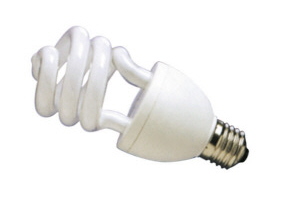
Graphic for this article was taken from SaverPlus Lighting, please check out their website and no, they did not pay for the advert. ;)


technorati tags: , , , ,,

Thursday, May 25, 2006

ANWR Vote

ANWR drilling bill up for consideration in U.S. House
Rep. Richard Pombo, the California Republican who leads the House Resources Committee, introduced the bill late last week. Unlike previous ANWR-drilling bills approved by the House, Pombo's bill has no other provisions. Its sole purpose is to allow oil leasing in ANWR.

Several senators have vowed to filibuster any ANWR-drilling bills, and Alaska's senators have not been able to muster enough votes to shut down those filibusters in recent years. So passage in that half of Congress remains unlikely, according to environmental groups.

The Sierra Club on Wednesday distributed a history of recent failed attempts to approve ANWR drilling in the past decade. "There's a lesson here: The Arctic Refuge isn't for sale," it said.


technorati tags: , , , ,,

Wednesday, May 24, 2006

Did you know?

That there are currently 27 taxis in New York City that are hybrids? Did you know that most of them are Ford Escapes?

The Ford Escape has an EPA mileage rating of:
36 mpg in the city and 31 mpg on the highway

It also meets strict California AT-PZEV emissions as well as Tier 2, Bin 4 Federal emissions standards.

Now a normal Escape gets 25 to 29 mpg on the highway and starts around $20K while the hybrid Escape runs closer to $27K.

Last, but not least, remember that hybrid vehicles could spell tax break for those of us in the U.S. (not sure about other countries and their policies). Also be sure to consult with a tax professional on this matter.


technorati tags: , , , ,

Tuesday, May 16, 2006

Quick Nuke Facts

Found these here.

To produce one Watt of electricity, it takes 1.0 lbs. of coal/kWh from coal plants using steam turbines, 0.48 lbs. of natural gas from natural gas using steam turbines, 0.37 lbs. of natural gas/kWh using combined cycle technology, 0.58 lbs. of Heavy Oil/kWh using steam turbines, and .0000008 lbs. of Uranium enriched at 4% U235 and 96% U238 for use in a commercial nuclear reactor.

Vermont, in 2005, generated the greatest percentage of its electricity from nuclear energy of any state: 72 percent. New Jersey and South Carolina generated more than half of their electricity from nuclear energy in 2005.

As of May, 2006, 30 countries worldwide were operating 440 nuclear plants for electricity generation. Twenty-seven new nuclear plants were under construction in 11 countries.

In 2005, U.S. nuclear power plants prevented 3.32 million tons of sulfur dioxide, 1.05 million tons of nitrogen oxide, and 681.9 million metric tons of carbon dioxide from entering the earth’s atmosphere.

Since March 1993, 250 metric tons of uranium from weapons have been transformed into fuel for nuclear power plants. That's the equivalent of 10,000 dismantled nuclear weapons. This is the result of the United States and the Russian Federation signing an agreement on the disposition and purchase of 500 metric tons of highly enriched uranium from dismantled Russian nuclear weapons, the equivalent of 20,000 nuclear warheads.

Okay, that one might be a little scary. I mean 10,000 warheads? Who would need that many?


technorati tags: , , ,

Alternative Energy staying at the forefront...

This morning oil dipped a bit more, into the $69 range, as investors started to worry that a correction in the market has been overdue. No one wants the bubble to suddenly burst but rather go for a softer landing. The fed tax rate the other day, decreased demand for oil, and comments by Saudi Oil Minister Ali Naimihave all contributed towards the recent downward trend.

It has taken the high oil prices to get the average American citizen to support alternative energy. While most of the focus has been at the gas pump because that is where it has hit consumers the hardest, it is not the only area in which alternative energy is needed.

AMD is challenging the notion that energy efficient processors means that they will not perform like their big, bad, energy hog brothers. AMD also takes energy efficiency seriously in their plants and is "committed to an improved global environment."

Speaking of energy efficient plants, Hydrogen has had a lot of good news recently. While they took a loss in Q1, they invested heavily into their R&D.

Wind farms have recently made the news. This is the alternative energy that the greens have a love/hate relationship with at the moment. While it does harness the wind's energy and lowers reliance on fossil fuel supplies, it may also do a large bit of harm to birds. That does not seem to have slowed down their proposed construction. Nick over at Greenr posted yesterday about America's largest offshore wind farm that is proposed to be put into Texas. Also a bit further up north, "Sixty-nine state legislators have signed a letter to Congress in opposition to a proposed federal amendment that would allow the Massachusetts governor to veto the Nantucket Sound wind farm."

There was also a post at Greenr concerning the military's new search for an alternative to oil based fuel.

Now we have to take a look at what will be the most likely form of alternative energy that will dominate the market. There are a variety to choose from in every field. Perhaps the answer is D) All of the above but will that allow the pricing for these technologies to drop enough so that the average consumer could afford to put them into place?

Fill 'Er Up -- But With What?
Hydrogen from algae - fuel of the future?

Will America be the leader in all of this? Maybe. Right now if one is to look at the Global Index of the Alternative Energy sector, you would find that Europe is outpacing America.


technorati tags: , , ,

Tuesday, May 09, 2006

Green Energy Around the Globe

First up, a news source from Southern Spain.


Green energy: full speed ahead

The wind, the sun and residues are no longer just potential sources of energy, they are fast growing enterprises. The boost in these businesses has come from the Andalusian Energy Plan, which has set a target of 15 per cent of the region’s energy being provided by these sources by 2015.

“We don’t foresee an easing up in demand until 2012 at least”, says Javier Gorbeña, the commercial director of Isofotón, the top European manufacturer of solar panels, based in Malaga. “The solar panel business is almost as safe a bet as a pension plan”, jokes José Manuel Gómez, the manager of Novasolar, a franchise in Malaga which deals with setting up the installations, obtaining subsidies and financing “solar fields”.

Now we head to a news source in Ireland.

Power station rejection prompts green energy plea

Mr Ó Brolchain said it would be far more efficient for the ESB to develop local power generation, which would lead to less power being wasted in transmission.

“One of the things we’re plugging in the west of Ireland is a far more liberal approach to ways of electricity generation such as wind power, wave power and tidal power,” he said.

Now over to Iceland...
Iceland harnesses green energy for heat, power
Now, hydropower — using water — and geothermal plants provide all of the electricity, heat and hot water for the entire nation.

“A lot of western countries envy Iceland for their renewable energy we have — we can actually run the whole power system on hydro and geothermal — its emission free, and its renewable,” said Thorsteinn Hilmarsson of the Landsvirkjun Power Co.

“We've been utilizing our geothermal resources for decades now, and we know it works — its renewable, you can utilize it for decades or hundreds of years and it comes from the heat down below our feet,” added Arni Magnusson from the Glitnir Bank Energy Sector.

And now for the rest of the world:
Conservation council wants Govt to commit to green energy
The environmental movement in north Queensland is calling on the Federal Government to commit money to true green energy in tomorrow night's Budget.

The North Queensland Conservation Council says previous Budgets have focussed on clean coal technology, but it would prefer to see funds for solar and wind generation and geothermal energy.

Israeli 'green energy' company makes 100 most promising companies list
May. 08 - Genova Ltd., an Israeli company part of the Misgav Technology Center, has been included in Red Herring's list of 100 most promising companies in 2006. Genova, which is developing methods to produce energy and generate electricity from biomass, is one of thirteen Israeli companies on the list, and the only one which focuses on green energy. The list itself promotes small and medium-sized companies with a turnover of up to $10 million, and has included Skype, eBay and Google in the past. Founded in 2004, Genova is the first company to develop a way to generate energy from biomass that doesn't take up a great deal of space. Over the past two years Genova has conducted successful experiments using olive waste, and company CEO Yonat Granot believes that olive-growing companies in Europe will be a main market for their product.

Yemen to take part in Green Energy Conference
The conference, organized by the Egyptian Ministry of Electricity and Energy, would discuss the problems and the obstacles that hinder MENA countries using renewable energy, sources in the Ministry of Electricity said.
The sources said that the conference would also discuss strengthening regional cooperation to encourage using solar, wind and biomass energy.

Planning commission endorses Mohawk River hydroelectric plan
The Green Island Power Authority's plan to develop a hydroelectric project at the Cohoes Falls on the Mohawk River has another backer.

The Capital District Regional Planning Commission has endorsed the authority's plan to build a new state-of-the-art hydroelectric plant which would replace the existing School Street station now operated by Brookfield Power Corp.


technorati tags: , , , , , , ,

Monday, May 08, 2006

Oil Slides and Clean Energy Advances

Wow, what a nice thing to wake up to this AM, prices about 15 cents lower than last week for regular Unleaded. Now where I live at is a bit above the national average so this slide gets us about even with the rest of the country.

For those who have not read, oil was down today. What caused it to dip below $70 a barrel? A letter from the Iranian president to President Bush trying to find a way to work out the issues between the two countries. Kind of hard to negotiate with a country that is proposing to wipe Israel off the map. Oil company stocks also slipped with the oil prices. Not to fear investors! You can still continue this bubble (at your own financial peril).

Here are two issues that we are bound to see come up again this week:
Venezuela wants to tax oil companies at a rate of 50%.
Australia is running out of oil.

OSPIRG is calling on the citizens of Oregon to demand more green/clean energy by trying to force the legislature to require that 25% of Oregon's electricity come from clean sources by 2025.

Pa Governor announces that $10 Million USD will be available to make clean energy investments.

Greenpeace helped apply pressure to the Asian Development Bank over issues of clean energy. Now that the ADB has announced about $1Billion USD will be in the works by the end of 2008. Greenpeaces says not enough! Just shows you cannot please all of the people all of the time.


technorati tags: , , ,

Friday, May 05, 2006

Solar Power News of the Moment

Over in Wales, the government is being chastised for not being a leader in solar power. The article, ` Assembly should show 'strong lead' on solar power', quotes a spokesman saying:
"We have the largest PV array of its kind in the world at the Assembly Government's Technium OpTIC in North Wales. At Bronllys Hospital, near Brecon, 485 PV panels deliver all the hospital's base load electricity requirements."

In business news, ` Merriman Curhan Ford & Co. Announces Launch of Next-Generation Energy Index(SM)'.
The Merriman Curhan Ford & Co. Next-Generation Index(SM) will be comprised of 30 small- and mid-cap U.S.-listed companies leading the important advances in the development and commercialization of five key NGE technology areas: fuel cells, solar power, alternative fuels, energy storage and other supporting technologies. Tracking begins today.

A Wisconsin university professor has definately been leading by example, which is kind of nice. He and his family live in a south facing, well insulated home that is now hooked up to a solar panel array that tracks with the sun's movement. The solar panel array is expected to provide about 35% of their total energy for the year.
Cain said he paid “in the neighborhood of $30,000” for his new PV array. First he persuaded Ruth that some creative financing would be worth the investment. Then he began to envision his electric meter running backwards.

That’s what happens if the Cains use less electricity than the array produces. The meter runs backwards as energy gets redirected to the area’s main grid and sold. A process called net metering measures what’s coming back.

The federal government offers incentives via rebates and tax deductions. Cain said incentives on solar and other renewable energy can come from power companies, but they must participate in the state’s Focus on Energy program - the part that includes financial incentives for renewable - which supplies the up-to-35% rebate.

I also ran across this Tech Digest article on the Ecotopia's Solar Insect Theatre.
The Solar Insect Theatre is a neat little insect habitat. During the day, its solar-charged batteries get their charge, by night it uses the power to light up in a fashion appealing to moths and butterflies.


technorati tags: , , ,

Thursday, May 04, 2006

Save the ocean environment, build an oil rig?

Due to the lack of any appreciable amount of infrastructure to drive us towards using renewable energy in the near future we still have to turn to oil. Even if we were to move towards say a hydrogen energy econonmy, oil would still be needed to manufacture things like the computer that you use and the roads that you drive on.

The quickest fix for the American dependence on foreign oil (which many mistakingly believe it only comes from the middle east) is to increase oil recovery in it's own borders.

One such item is the oil rig. Oil rigs are the massive structures we see in movies and on television that float out on the water and drill for oil and/or natural gas. Yes, it is possible to have natural gas present in deep wells where oil cannot exist due to temperature and pressure. Oil rigs keep part of the process for energy off the shore and thus, out of the backyards of Americans who would rather not see such things. They are also vulnerable to the weather and other influences. (OK, truth be told these are actually oil platforms, pass it on).

The good news is that oil rigs do tend to attract quite a bit of aquatic life around them. The bad news is that they might have an accident or some leakage that will impact the surrounding area. The biggest threat is from the ships that deliver diesel fuel to the rigs. If one were to lose all of the diesel into the ocean that would be about 1800 bbl spill.

While there have been some rigs on foreign waters that have gone under for one reason or another, oil rigs are relatively safe in the long term. The Minerals Management Service, part of the US Department of the Interior, reports that there has not been a huge amount of spillage from a rig.
Since 1980, OCS operators have produced 4.7 billion barrels (bbl) of oil and spilled only 0.001 percent of this oil, or 1 bbl for every 81,000 bbl produced. In the last 15 years, there have been no spills greater than 1,000 bbl from an OCS platform or drilling rig. The spill risk related to a diesel spill from drilling operations is even less. During the 10-year period (1976-1985) in which data were collected, there were 80 reported diesel spills greater than one barrel associated with drilling activities, compared with 11,944 wells drilled, or a 0.7 percent probability of occurrence. For diesel spills greater than 50 bbls, only 15 spills have occurred, or a 0.1 percent probability.

The same site goes on to state that, in the Gulf, natural seepage from the oil wells is far greater than what is spilled into the ocean by humans.
Natural seepage of oil in the Gulf of Mexico (unrelated to natural gas and oil industry operations) is far more extensive. Researchers have estimated a natural seepage rate of about 120,000 bbl per year from one area (23,000 square kilometers) offshore of Louisiana.

Oil rigs are also getting smaller. Check out this DOE page about the R&D for platforms today.

That is not to say that the oil industry has not had it's share of accidents over the years, as this CNN article demonstrates. Also read about the Brazilian oil spill caused when an oil rig sunk.

To get an idea of what is involved in an oil spill and cleanup or if you want to demonstrate those concepts to another or even a young one, consider this activity.

The Mariner Group has a listing of oil spills from all sources, not just rigs.

However, oil rigs have been hit with very severe weather such as Hurricane Ivan and survived beyond all expectations. This has led to investigations to find out why so that future platforms can be safer, both for the people who live and work there and for the environment.

Speaking of safety, this website mentions a number of safety action items that is considered on an oil rig. Here is a description of an oil rig safety job. $80K per year shows that it is taken seriously.

Environmental impact:
Emissions from offshore oil and gas activities.
EVALUATION OF A GRADIENT SAMPLING DESIGN FORENVIRONMENTAL IMPACT ASSESSMENT

See also:
NOIA: About Offshore Oil and Gas
Howstuffworks: "How Oil Drilling Works"


technorati tags: , , ,

Change in Wind Speed and Ocean Temps, Humans to Blame?

There is an article in Nature magazine that is being used as the basis for a lot of climate change articles today. For many people, they will use the articles to spout off facts but the reality is not so solid.

The study shows that there has been a decrease in the Walker Circulation, most notably since World War II. That would appear to make sense due to the heavy industrial buildup and other sources of released carbon and other material into the atmosphere. The overall drop they say is about 3.5% since the 1800s. That would have to be the late 1800s since the english physicist, Sir Gilbert Thomas Walker, was not born until 1868.

In short the Walker Circulation is the circulation of air near the equator in the Pacific Ocean. It is thought to be the cause of the ocean upwellings near Peru and Ecuador. The upwellings are very important as they bring up very nutrient rich cooler waters from deep below. This is important because those nutrients are fed on and used by smaller animals and plants. Those animals are then fed on by birds and fish. Reducing the nutrients means that there is less to feed the animals and plants, which will cut back on their population. Cutting back on their population means that there is not enough for the birds and the fish and so they cut back on their population. If the downward cycle does not reverse or at least hold steady for quite some time, we could see the dying off of many birds and plants.

Sir Gilbert Thomas Walker was also the person who first described the effects of what we now call El Nino and La Nina. El Nino is an ocean-atmospheric occurance and can usually be seen around Christmas time near South America. As most know, El Ninos can have quite an impact.

The study proposes that the change in the air circulation can possibly bring about a long term effect very much like El Nino.

This article states:
The weakening of wind circulation was detected in shipboard and land-based data going back to the mid-1800s. It matches an effect predicted by computer climate simulations that trace global warming to a buildup of heat-trapping greenhouse gases, the researchers report. But simulations that consider only natural influences fail to produce the same slowdown, Vecchi said.

So, it appears the circulation slowdown is due to the buildup of greenhouse gases caused by human activity, the researchers concluded.

Wiki sources used for information:
Walker Circulation
El Nino-Southern Oscillation
Gilbert Walker

Meanwhile, China's glaciers appear to be in a rapid retreat. A 7% decline every year has been monitored and the areas will turn into high desert which could lead to more droughts and sandstorms. The data was collected over decades from 681 weather stations.

Climate change has been in the thoughts to everyone so much that it is getting religious.
Rev. Cizik said political stewardship, like environmental stewardship, has a biblical grounding. "The strategy is to hold political leaders accountable," he added, citing Jesus' reply to Pontius Pilate. Jesus said: "You would have no power over me if it had not been given to you from above."

Climate change is also forcing migratory birds to change their eating habits or die off. The warmer weather means that food staples emerge earlier and if the birds do not arrive in time, they find themselves without enough food to maintain the population.

Meanwhile Canada is cutting $1 Billion from their climate change programs over the next five years. The money is being used to fund a change in their tax laws that will allow citizens to save their bus fare receipts and claim it on their tax returns.


technorati tags: , , ,

Wednesday, May 03, 2006

Global Warming Skeptics Silenced?

One of the reasons, if not THE biggest reason, for the push toward renewable resources that have a minimalistic impact on our environment is due to what has become known as Global Warming. The problem was that many early studies were flawed and allowed skeptics, such as myself, to blow big holes into the argument (yes, when you measure sea water that has just passed through an engine, it will indeed be warmer).

A new study has looked at another point where the skeptics pretty much beat down the supporters. The fact that satellites had shown that the warming trend on the Earth was nowhere near as bad as what the earth bound sensors were supposedly saying. Apparently the scientists were baffled and started looking towards why. Well, there was an error in the system and one they seem to have worked out.

The final result? Earth warming up? Yes. Drastic upward trend? Except for some key points such as the 70s, not so much. Human influenced? You will be able to argue it into the ground. Why? We have no idea what kind of cycles the Earth naturally goes through nor do we completely understand how the Earth typically responds to said changes and adapts to them which means we have no idea on how our impact is stopping the Earth from doing so.

So warming up is happening, one way or another. Is it worth the time and capital to invest in alternative sources when they are not really needed since the fossil fuels are plentiful? Yes, it is. Investigating these technologies will give us fresh looks and new technology for other areas. Click to read through the site: NASA spinoffs, space benefits, space history.

Not only that but I personally believe we should make reasonable changes to how we do things to make sure that we have not so much of a big impact on the Earth. If a small change such as a fuel source brings us to that, then we should work towards such a thing in a reasonable manner.

Article link:
Washington Post, Study Reconciles Data in Measuring Climate Change
NYT, Federal Study Finds Accord on Warming
TechNewsWorld, Scientists Resolve Global Warming Data Discrepancies
FinFacts Ireland, Study by US Government agency on global warming says ""clear evidence of human influences on the climate system
Source material for articles:
Temperature Trends in the Lower Atmosphere: Steps for Understanding and Reconciling Differences

Wiki:
Global Warming
Climate Change


technorati tags: , ,

Monday, May 01, 2006

Oil Jumps In Price

Concerns over the stability of the oil supply caused oil to jump up to the $73 range today. Iran is still threatening everyone that they will be nuked if they try to stop them from getting the materials needed to make the nukes in the first place. Nigeria still has its woes and there was a fire in Italy that shut down a refinery.

Also the futures market is driving the price up even more. Which leads to more profit which leads to higher futures, etc.

The US replaced one unstable region for another when it comes to it's oil supply. Last year Africa topped the list of countries where the US purchases it's oil.

Finally, Bolivia nationalized oil and natural gas fields today. Link here and here.


technorati tags: , , , ,

Clean air, clean energy, and other assorted news

The American Lung Association recently released a report stating that the air quality in the United States has improved over the last decade. Of course Los Angeles is still considered one of the worst areas, in term of clean air. The ALA basically looked at the number of days in which the air was considered unhealthy to breathe. The east coast of the US showed the most improvement even though Baltimore, MD and Washington, DC are still listed among the worst places to live when it comes to air quality. The director for the ALA's national policy stated that while the report was encouraging, that the US still had room for improvement.

Speaking of the East Coast, Washington Township in New Jersey is considering solar power. Officials state that installing solar panels on the flagship school could reduce their energy by 70% and even generate a bit of revenue (normally done by selling extra power to the electric company). How much is their bill? Their bill last year was $389,000 USD and they expect costs to rise 11% during the next two years. The only thing holding them back is the $2.4 Million USD that it would cost for the project. Even so, they have applied to the New Jersey Board of Public Utilities which has a clean energy program.

The Hydrogenics Corporation has announced that GM has followed up their last order with another. What is this for? The company provides fuel cell testing services.

However, this article states that, `Hydrogen fuel far from ready for prime time.' The usual list of infrastructure, manufacturing costs, etc are raised. Those of us who follow this and are aware of history know that nothing comes into being without some sort of growing pains. The real question is what are consumers willing to do and pay for?

Now that does not mean that people and communities cannot come together in other ways to reduce greenhouse gases.

technorati tags: , , , , , ,

Friday, April 28, 2006

Link of the Day: EPA Alternative Fuels Site

Alternative Fuels - OTAQ - EPA

Index of Alternative Fuel Topics
Fact Sheets on Alternative Fuels
Certification Procedures & Emission Standards
Workshops and Meetings
Emission Models
Other EPA Links
External Links

Adobe Acrobat Reader needed to view some files.


technorati tags: , ,

Wednesday, April 26, 2006

Oil News for the AM

China's May imports are expected to be a bit less than previous months. Although the article admits that it is difficult to forcast the Chinese demand, forecasters are confident that the demand will be "much lower" due to the fact that 719,000 tons of fuel cargo this week. Of this a good portion is still unsold and will sit in the importer tanks, waiting for orders to come in. This did not seem to impact the Asian fuel oil prices as they are currently on the rise.

China has also managed to get 4 oil drilling licenses from Nigeria. In exchange China will invest around $4 billion in "downstream oil and infrastructure projects".
The two nations have been in talks for several months about such an agreement, which involves China buying a controlling stake in Nigeria's 110,000 barrel-a-day Kaduna oil refinery and building a railroad system and power stations.

Nigeria will offer first right of refusal to China National Petroleum Corp. (CNPC) for four oil exploration blocks during a licensing round due to be held in Nigeria on May 19.

An opinion piece in the Rocky Mountain News titled, 'A '70s revival on gasoline prices' argues that there is no "quick fix" for the gas price issue. At least none that may not impact us even more down the road.
There are few quick fixes available, though that hasn't stopped some Republicans from embracing a regulatory agenda that would make Jimmy Carter grin. And a rush to legislate could stifle energy production and economic vitality long after the 110th Congress is sworn in next year.

While it is impossible to see who wrote this and if they have any expertise in this particular arena, I find the opinions of the public have important value. After all it is perception that controls the futures prices. Iran may do this, Nigeria issues could cause that, etc, etc.

The US Justice Department is looking into allegations of criminal enterprise in the area of gas supply. The only catch is that it is not in the United States but overseas.
Gas traders to Western Europe face organised crime inquiry by the US
VITAL gas supplies to Western Europe are at the mercy of shady middlemen who have taken control of the gas trade between Russia, Ukraine and Turkmenistan, it was alleged yesterday.
Their unregulated business dealings have contributed to a sharp rise in the price of gas in leading markets, including Britain and Germany.

This link appeared in my inbox today. Apparently the Tax Foundation has gathered a bunch of data that shows how much the US Government has profited from the increase in energy taxes. It is much, much higher than what the oil companies have pulled in.
Due in part to substantial hikes in the federal gasoline excise tax in 1983, 1990, and 1993, annual tax revenues have continued to grow. Since 1977, governments collected more than $1.34 trillion, after adjusting for inflation, in gasoline tax revenues—more than twice the amount of domestic profits earned by major U.S. oil companies during the same period.


technorati tags: , , , , ,

Tuesday, April 25, 2006

Energy News

Yes, I know, I have not blogged often. I had a wee bit of a run in with a black widow spider. She protested the appearance of my arm in my mailbox by biting me a couple of times. Then there was the sports injury. Then I signed up for Second Life. ;)


Doubts over World Bank energy plan

But some committee members have doubts about the initiative, and outside experts were also unconvinced by its thrust. Bank officials will over the next two years study technology options available, analyze the impact of climate change in developing countries and propose specific programs.

The global lender estimates that two-thirds of the increase in world energy demand over the next 25 years will come from the developing world.

At present, 1.6 billion people in South Asia and Africa have no access to electricity, while nearly 2.4 billion people still rely on wood, agricultural residues and dung for cooking and heating.

Turning Dirty Coal Into Clean Energy

Because of that catalyst, GreatPoint's process works at a lower temperature than other technologies, which makes the process much cheaper. The catalyst also enables GreatPoint to separate out about half of the carbon dioxide, a chief cause of climate change. (The company plans to sell that carbon dioxide to be injected into oil or gas wells to facilitate production.) Other pollutants also are removed at the plant, which makes the product much cleaner than the synthesis gas produced by other gasification processes.

Benefits of clean energy quantified
New Jersey's $140 million investment in its Clean Energy Program last year saved enough electricity to power 50,000 homes and enough natural gas to heat 6,100 homes, the Board of Public Utilities said.

In addition, the statewide program helped finance projects that should produce even bigger energy savings in the future, the BPU said in its 2005 Annual Report for New Jersey's Clean Energy Program released Friday.

Black holes generate ‘green’ energy

"If you could make a car engine that was as efficient as one of these black holes, you could get about a billion miles out of a gallon of gas," said study team leader Steve Allen of the Kavli Institute for Particle Astrophysics and Cosmology at Stanford University. "In anyone's book, that would be pretty green."

Thursday, April 20, 2006

Gas Use Down

High prices are being credited as the reason why the demand for gasoline has not been as strong this year, even going into the red 0.6% last month. If this trend continues it is thought that it could lead to stabilizing gas prices at a lower cost per gallon.

High prices cut gas use

Wednesday, April 19, 2006

Improve Gas Mileage

With oil in the $70 USD per barrel range, it is important to conserve as much as possible. Right now the demand for gasoline rose only 0.9% when compared to last year. Last year rose by 1.4%.

The FTC has a list of things one can do to improve their gas mileage.

  • Stay within posted speed limits. Gas mileage decreases rapidly at speeds above 60 miles per hour.

  • Avoid unnecessary idling. It wastes fuel, costs you money, and pollutes the air. Turn off the engine if you anticipate a wait.

  • Remove excess weight from the trunk. An extra 100 pounds in the trunk can reduce a typical car’s fuel economy by up to two percent.

  • Change your oil. According to the U.S. Department of Energy (DOE) and Environmental Protection Agency (EPA), you can improve your gas mileage by using the manufacturer’s recommended grade of motor oil. Motor oil that says “Energy Conserving” on the performance symbol of the American Petroleum Institute contains friction-reducing additives that can improve fuel economy.

  • Check and replace air filters regularly. Replacing clogged filters can increase gas mileage up to ten percent.

  • Your owner’s manual recommends the most effective octane level for your car. For most cars, the recommended gasoline is regular octane. In most cases, using a higher octane gas than the manufacturer recommends offers no benefit. Unless your engine is knocking, buying higher octane gasoline is a waste of money.

  • Hybrid Electric Vehicles offer another option for car buyers. According to DOE and EPA, these vehicles combine the benefits of gasoline engines and electric motors and can be configured to achieve different objectives, such as improved fuel economy and increased power.

  • Be skeptical of claims for devices that will “boost your mileage by an extra 6 miles per gallon,” “improve your fuel economy up to 26 percent,” or the like. EPA has tested over 100 supposed gas-saving devices — including mixture “enhancers” and fuel line magnets — and found that very few provide any fuel economy benefits. The devices that work provide only marginal improvements. Some “gas-saving” devices may damage a car’s engine or increase exhaust emissions. For more information and a full list of tested products, check this.


  • The site has a few more but you get the idea. Keep your car well maintained and drive the posted speed limit.

    Friday, April 07, 2006

    Oil Woes Continue To Plague The U.S.

    Crude oil climbed higher yesterday, breaching the $68 per barrel mark. Most of this was due to a gasoline supply concern in the United States as inventories were reported to be lower than expected for the coming summer demand. The question is, at the current prices, how much of an extra demand will we see? Adding to the higher prices is the fact that refinary output was lower than it had been. While this is not unexpected due to a normal practise of effecting repairs and other work prior to the summer demand, investors feel that the refinaries are not increasing their productivity fast enough to meet the future demand in the coming months.

    Oil futures did dip early in trading, moving down closer to the $67 per barrel mark as investors decided to make a quick buck on the recent upwards trend. Also helping to ease supply fears is the fact that Nigeria has picked up production again and should return to their normal output sometime next month. OPEC's Edmund Daukoru also said that 1) there is a 1.9 million barrel surplus of oil a day, 2) that there are no plans to curtail the current production level and 3) that he favors the mid $50 oil prices over the mid $60 that we are currently seeing.

    Articles used for this posting:
    Oil Falls From Two-Month High as Nigeria Supply May Increase
    Oil Rises as U.S. Gasoline Supplies Slip, Refiners Cut Output
    Crude Oil Prices Fall on Profit Taking
    Oil Falls From Two-Month High as Recent Gains Seen Unjustified

    technorati tags: , , , , ,